ServicesExtractions
Tooth Extractions in Little Elm
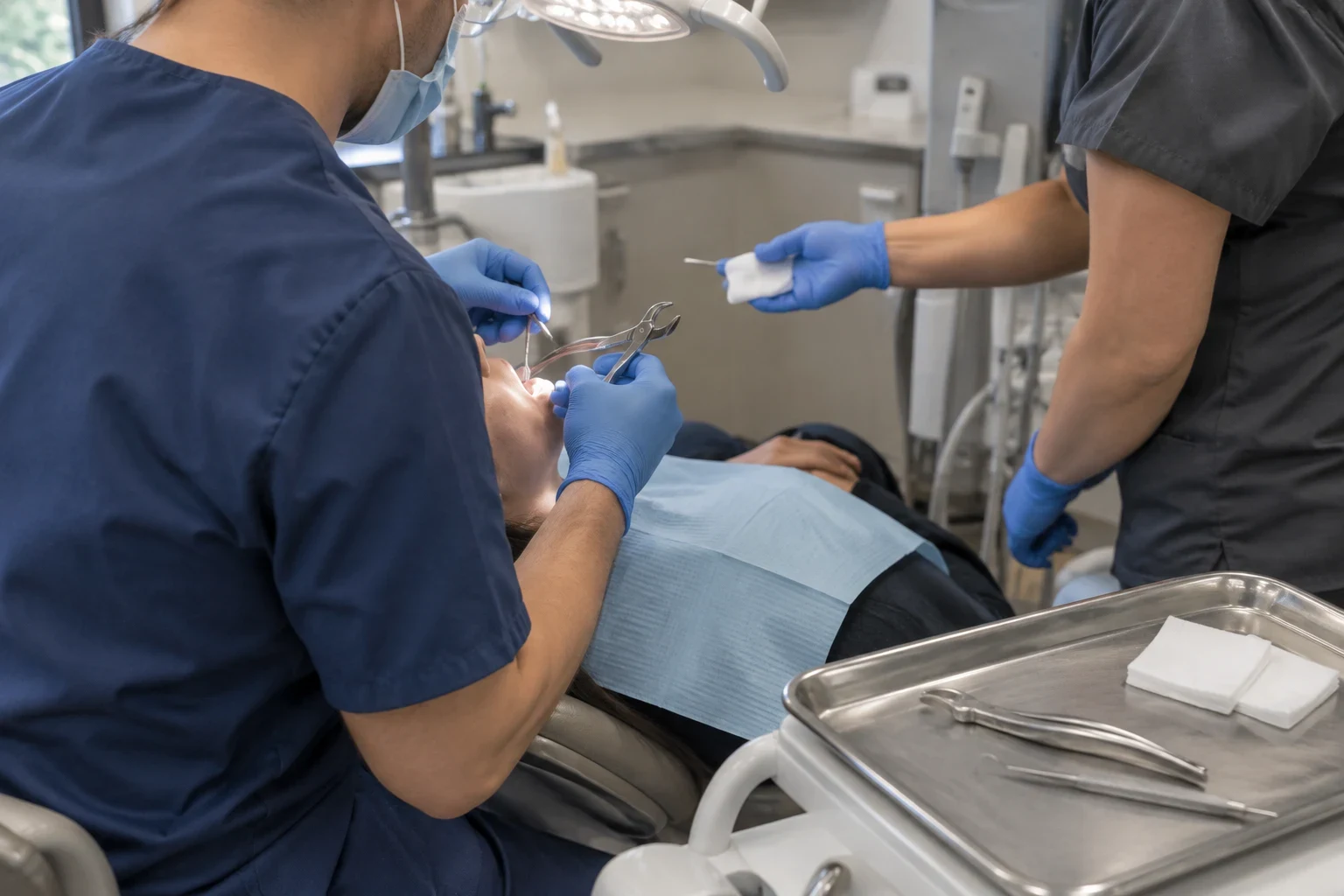
Some teeth can't be rebuilt: a root split by a fracture, decay that has gone past the bone line, or a tooth loosened by gum disease. We remove it with care, photograph each step, show you why it couldn't be saved and plan what replaces it.
When an Extraction Makes Sense
Saving the tooth is always our first question. Many infected or broken teeth can be kept with a root canal and crown, so we only recommend removal when too little sound structure remains to rebuild: a fracture that runs vertically through the root, decay extending beneath the bone, gum disease that has eaten away the supporting bone, or a tooth that stands in the way of orthodontic or denture treatment.
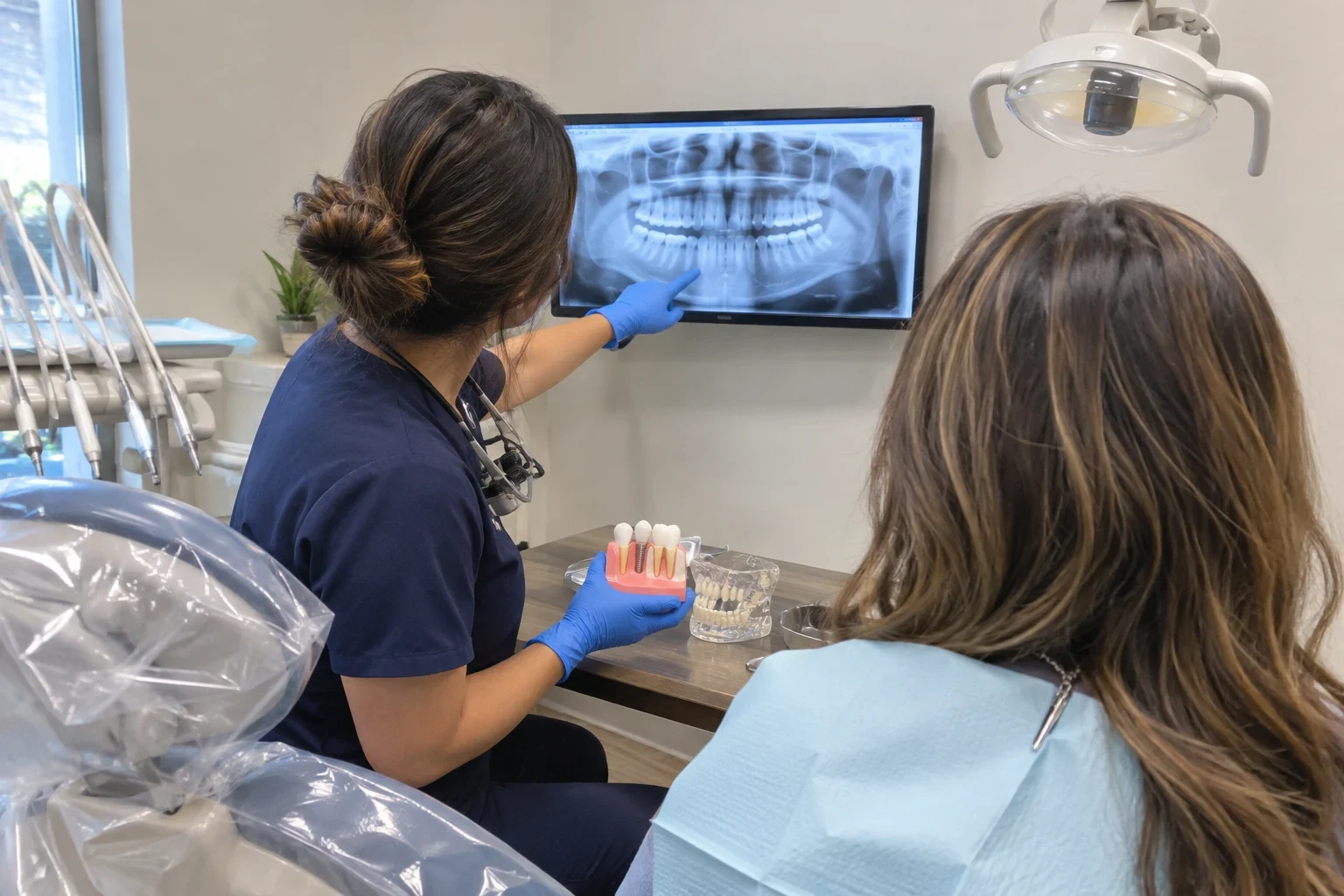
Every recommendation starts with digital X-rays and intraoral photos that we pull up on the screen with you. You can see the fracture line, the dark shadow of infection at the root tip, or how far the bone has dropped around the tooth. The reason for removing it is right in front of you.
We bring over 10 years of experience across general and implant dentistry to every extraction. Knowing what an implant needs changes how a tooth comes out, because a gentle removal leaves more bone in place for whatever replaces it.
What Your Extraction Includes
- Imaging before we start
- Digital X-rays show us the length and curve of each root and the bone holding it. If an upper root reaches toward the sinus floor or a lower root lies near the mandibular nerve, a CBCT scan gives us a 3D view before we touch the tooth.
- Simple extractions
- When the whole tooth is above the gum, we use elevators to stretch the periodontal ligament, then lift the tooth free with forceps. Once you are numb, most of these take just a few minutes.
- Surgical extractions
- Roots broken off at the gum and molars with spread roots are often divided into pieces, and each root is lifted out along its own angle. That approach takes away less bone than pulling the tooth out whole.
- Socket care and grafting
- With the tooth out, we clear away infected tissue and inspect the bony walls of the socket. If an implant is the plan, a graft placed the same day helps stop the ridge from collapsing as it heals.
- Photo record of the visit
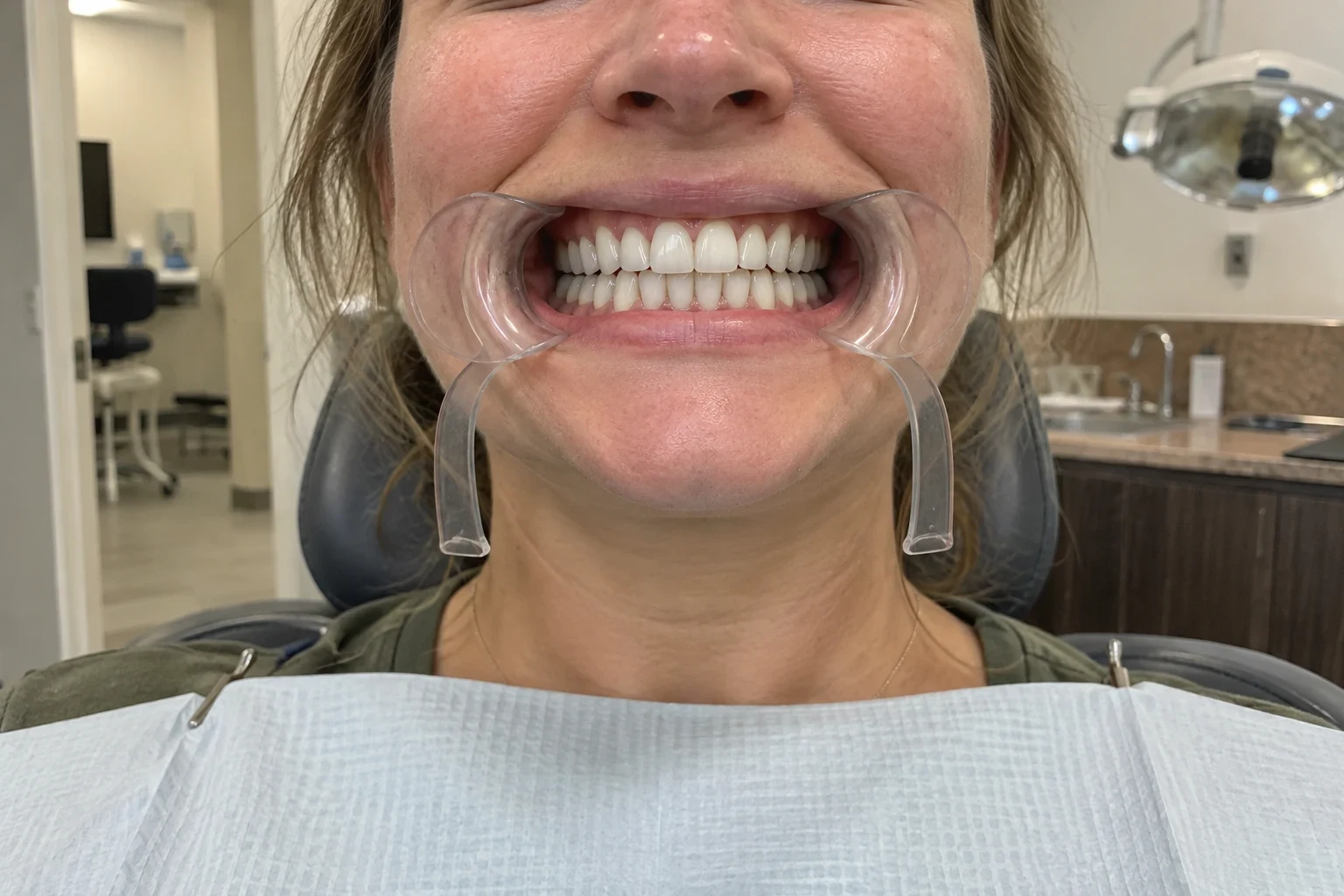
- We take photos of the area before, during and after removal. They are saved in your chart and guide whatever comes next, from an implant to a bridge or a denture.
Signs a Tooth May Need to Come Out
A crack you can feel
Sharp pain when you bite and release often points to a cracked tooth. If the crack runs down into the root, the tooth usually cannot be sealed.
Decay that has hollowed the tooth
When a cavity has eaten away most of the crown and reaches below the gumline, there may be nothing solid left to hold a filling or crown.
A tooth that moves
Looseness usually means the bone around the root has been lost to gum disease. Once enough support is gone, the tooth will not firm back up.
Swelling or a bump on the gum
A pimple-like bump or a swollen jaw signals infection draining from the root. Sometimes a root canal fixes it, and sometimes the tooth has to go.
A failed root canal tooth
An older root canal that is sore again or shows a new dark spot on the X-ray may be past retreatment.
How Extraction Day Works
- 1
Review the images together
We pull up your X-rays and photos, confirm which tooth is coming out and tell you whether it will be a simple or surgical removal. You know what the visit involves before we pick up an instrument.
- 2
Numbing confirmed before removal
After placing local anesthetic, we test the tooth and gum to make sure sensation is gone. Pressure during the extraction is normal, but if you feel anything sharp, we pause and give more anesthetic.
- 3
Removal and socket care
We lift the tooth out with elevators and forceps, or section it first in a surgical case. Then we clean the socket, add a graft if it is in your plan and place stitches where they help the gum close.
- 4
Aftercare and follow-up
You go home with gauze, written instructions and a plan for the next several days, including how to keep the clot in place and prevent dry socket. At your follow-up we check how the site is healing and photograph it again.
What Changes the Fee for an Extraction
Most of the fee comes down to two things: how hard the tooth is to remove, and what you choose to do with the space afterward. We give you the fee for your treatment plan before the visit, not after. We are in-network with 15+ major PPO dental insurance plans. If you would rather spread payments out, 0% interest financing runs for up to 24 months, and seeing if you are preapproved has no credit score impact.
- Simple or surgical
- A fully erupted tooth with one straight root takes less time and fewer steps than a snapped-off root or a three-rooted molar that has to be cut into sections.
- Imaging needs
- Most extractions are planned from standard digital X-rays. A CBCT scan is added when the roots are near the maxillary sinus or the lower jaw nerve.
- Bone grafting
- Placing a graft raises the fee, but it preserves the width and height of the ridge if an implant is part of your plan.
- Insurance or membership
- PPO plans often cover a portion of an extraction. If you have no insurance, our In-house Membership Plan is built to bring your out-of-pocket cost down.
Extraction Questions
Something not covered here? (972) 853-5982
Will it hurt?
Local anesthetic blocks the pain nerves, so what most patients notice is firm pressure and some rocking motion. Expect a few days of soreness afterward, which over-the-counter pain relievers usually handle. Before you go, we tell you exactly what to take and when.
What is dry socket and how do I avoid it?
Dry socket is what happens when the blood clot is lost from the socket and the bone underneath is left exposed. It shows up as a deep, throbbing ache two to four days after the extraction. For the first several days, avoid straws, smoking and forceful rinsing so the clot can stay put.
Should I replace the tooth?
In most cases, yes. Teeth next to the gap tend to tip into it, and the tooth above or below can drift out of its socket, which throws off your bite. Our Dental Implants and Dentures pages cover the options, and we can map out the replacement during the same visit.
Can an implant go in right after the extraction?
It can when the socket walls are intact and there is no active infection. If not, we graft the socket and give it time to heal before placing the implant. And if a new implant does not take during its 4-month healing phase, we replace it at no charge.
How do I start?
Phone us and ask for the $25 focused evaluation. That visit covers treatment planning and consultation, along with a comprehensive exam, digital X-rays and a CBCT scan if your case calls for one.
See the X-Rays Before You Decide
We show you exactly what is wrong with the tooth and explain whether it can be saved. If it has to come out, you leave knowing what replaces it.