ServicesDental Implants
Dental Implants in Little Elm
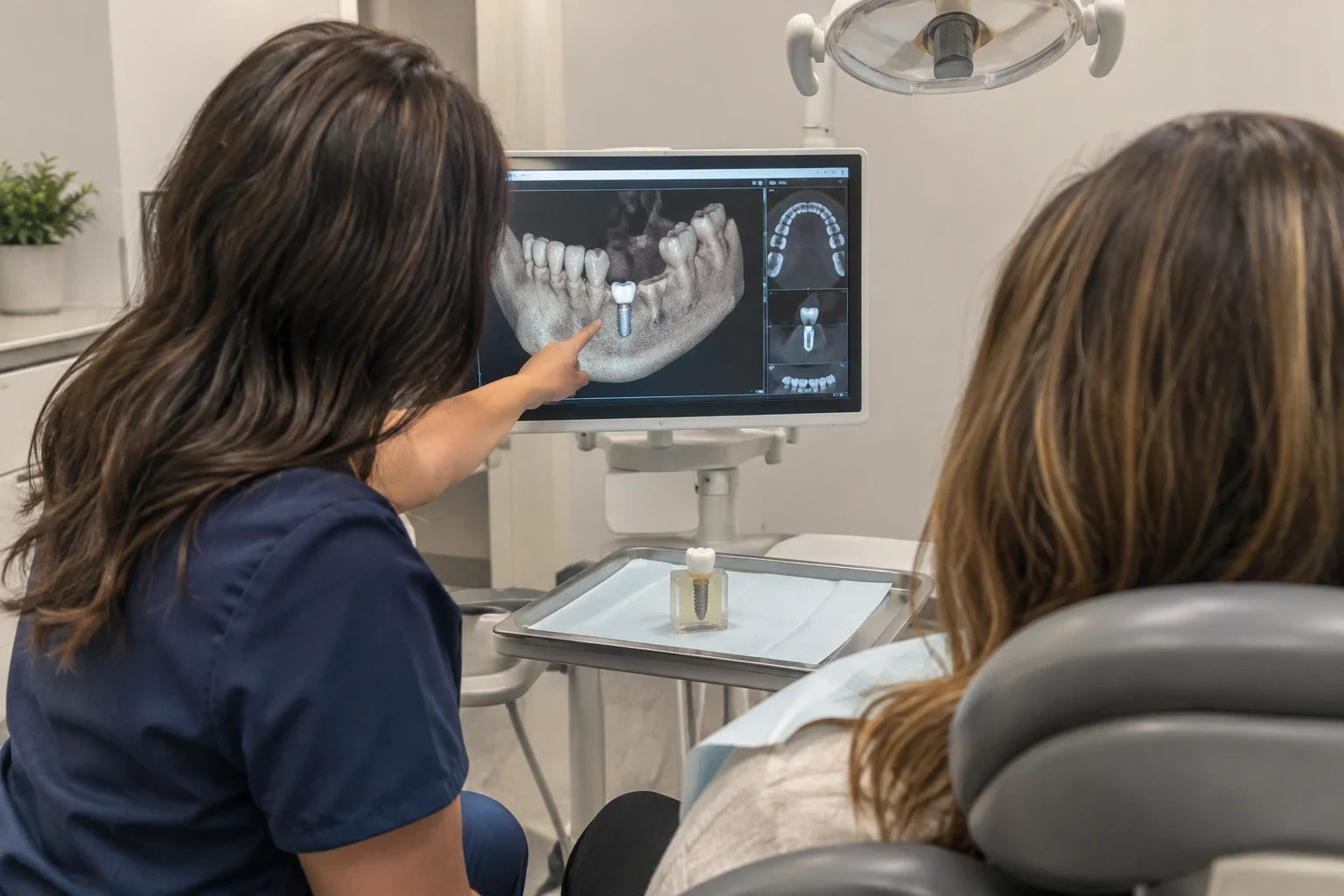
We replace missing or failing teeth with a titanium post that fuses to your jawbone, topped with a custom crown. Before anything is placed, we show you the CBCT scan and photos of what we found, then explain what we plan to do and why.

How an implant works and who it suits
An implant replaces both the root and the visible tooth. The root is a titanium post set into the jawbone. A connector called an abutment comes up through the gum, and a crown, bridge or denture attaches to it. During healing, bone grows tightly against the titanium surface, a process called osseointegration. Because the post is anchored in bone, it handles full chewing force, and the load it sends into the jaw helps slow the bone loss that follows a missing tooth.
Implants make the most sense when a tooth is already gone, or when one is split below the gumline or too decayed to rebuild. If a root canal and crown can still save your tooth, we tell you that before anything else. We bring over 10 years of experience in general and implant dentistry to that decision, and a good part of that experience is knowing when an implant is the wrong call.
At every stage we show you the intraoral photos and scan views behind each step, so you can watch your own healing instead of taking our word for it.
What your implant treatment includes
- CBCT 3D imaging
- A cone beam CT gives us a three-dimensional view of the jaw: how tall and wide the bone is, how dense it is, and where the lower jaw's nerve canal and the upper jaw's sinus floor sit. We set the post's angle and depth from that model rather than a flat X-ray.
- Titanium implant post
- The post is placed under local anesthesia, sized to the bone measured on your scan. A narrow ridge may call for a smaller diameter or a graft first.
- Bone grafting when needed
- After a tooth is lost, the ridge can shrink. If the scan shows too little bone to anchor the post, we add graft material and let it mature before placement.
- Abutment and custom crown
- Once the post has fused, we attach the abutment and fit a crown shaded to match the teeth beside it. We adjust the bite so the implant does not take more force than a natural tooth would.
- Photo record at each visit
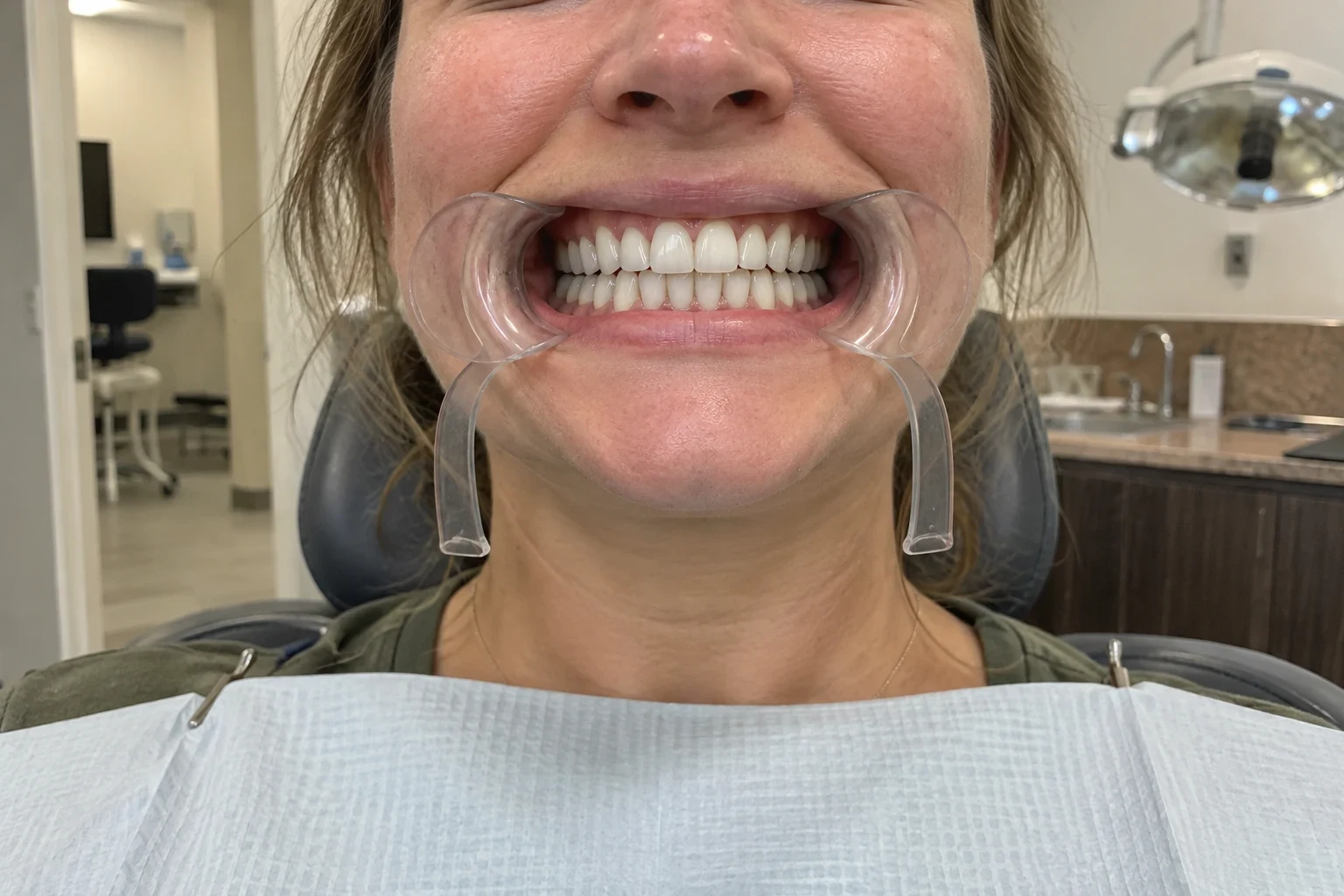
- We capture the site before treatment, after placement, during healing and with the final crown seated. You can review every image, and each one stays in your chart.
Signs an implant may be the right fix
A gap from a lost tooth
Neighboring teeth tend to tip into an open space, and the opposing tooth can drift out of its socket. The longer the gap stays open, the more the bite shifts.
A tooth that cannot be saved
A crack that runs down the root, or decay that has reached below the bone, usually means the tooth has to come out. Extractions and implant planning can be coordinated so the site is ready.
A loose or sore denture
Dentures rest on gum and bone that keep resorbing, so the fit loosens over time. Two or more implants can anchor a denture so it clicks in place.
A failing bridge
When the teeth supporting a bridge develop decay or fractures, replacing those teeth with implants avoids cutting down more healthy enamel.
Chewing on one side
If you avoid one side because a tooth is missing or painful, the other side wears faster. An exam shows what is going on underneath.
What moves the price of an implant
No two implant cases cost the same, because the fee follows what sits under the gum: bone volume, infection and how many teeth are involved. After we review your scan, you get a line-item plan that prices each phase on its own line. We are in-network with 15+ major PPO dental insurance plans. You can also spread the balance over as long as 24 months at 0% interest, and checking whether you preapprove has no impact on your credit score.
How many posts
Replacing one tooth takes one post and one crown. A full arch is often supported on four to six posts rather than a post for every missing tooth.
Bone volume and density
A graft or sinus lift adds a procedure and extra healing time. The CBCT scan shows whether you need either before you agree to anything.
Removing a tooth first
Taking out a failing tooth, particularly an infected one, is its own step with its own line on the plan.
What goes on top
A single crown, an implant bridge and an implant-supported denture each use different components and different lab work, so their fees differ.
Coverage or membership
PPO benefits for implants vary widely from plan to plan. Patients without insurance can ask about our In-house Membership Plan.
How the implant process runs
- 1
Evaluation and scan
Your first visit covers a thorough exam and digital X-rays, with a CBCT scan added when the case calls for it. We walk through the images together, and you take home a written treatment plan broken into phases.
- 2
Preparing the site
If a tooth has to come out or the ridge needs grafting, that happens first. We image the socket so you can see the bone we are working with.
- 3
Placing the post
With the area numbed, we open a small flap in the gum, prepare the bone and seat the titanium post. Most patients describe soreness for a few days, similar to an extraction.
- 4
Healing and fusion
The bone needs about four months to bond with the post. Our healing-phase policy covers replacing an implant that fails during that 4-month window.
- 5
Final restoration
We place the abutment, take impressions and seat your crown, bridge or implant denture. A last image and a bite check close out the treatment.
Dental implant questions
Does getting an implant hurt?
We place the post under local anesthesia, so what you notice is pressure rather than sharp pain. For a few days afterward the area is usually tender and a little swollen. Most patients get by with over-the-counter pain relievers and a soft diet.
How many months should I expect from start to finish?
The bone needs roughly four months to bond with the post once it is in, and a bone graft beforehand adds time. Each appointment along the way is fairly short. Your written treatment plan lays out the timeline phase by phase so nothing comes as a surprise.
What happens if the implant does not take?
Now and then the bone fails to bond to the post, most often because of infection, smoking or heavy biting force during healing. If an implant fails during the 4-month healing phase, we replace it at no charge. We also show you the images and X-rays that point to the cause.
I lost my tooth years ago. Can I still get an implant?
In many cases, yes, though the bone in that spot has likely thinned. The CBCT scan measures the remaining height and width precisely. When there is not enough to hold a post, a graft can rebuild the ridge first.
Will my PPO insurance cover implants?
It depends on the plan. Some PPO policies pay toward the post, the crown or both, while others leave implants out entirely. We are in-network with 15+ major PPO plans and can look up your benefits once your plan is written, and 0% interest financing for up to 24 months can handle what insurance does not.
See your scan before you decide
Our $25 focused evaluation includes a comprehensive exam, digital X-rays, a CBCT scan if your case calls for one, plus treatment planning and a consultation. You leave having seen your own bone on screen and with a clear plan for what comes next.