ServicesDentures
Dentures in Little Elm
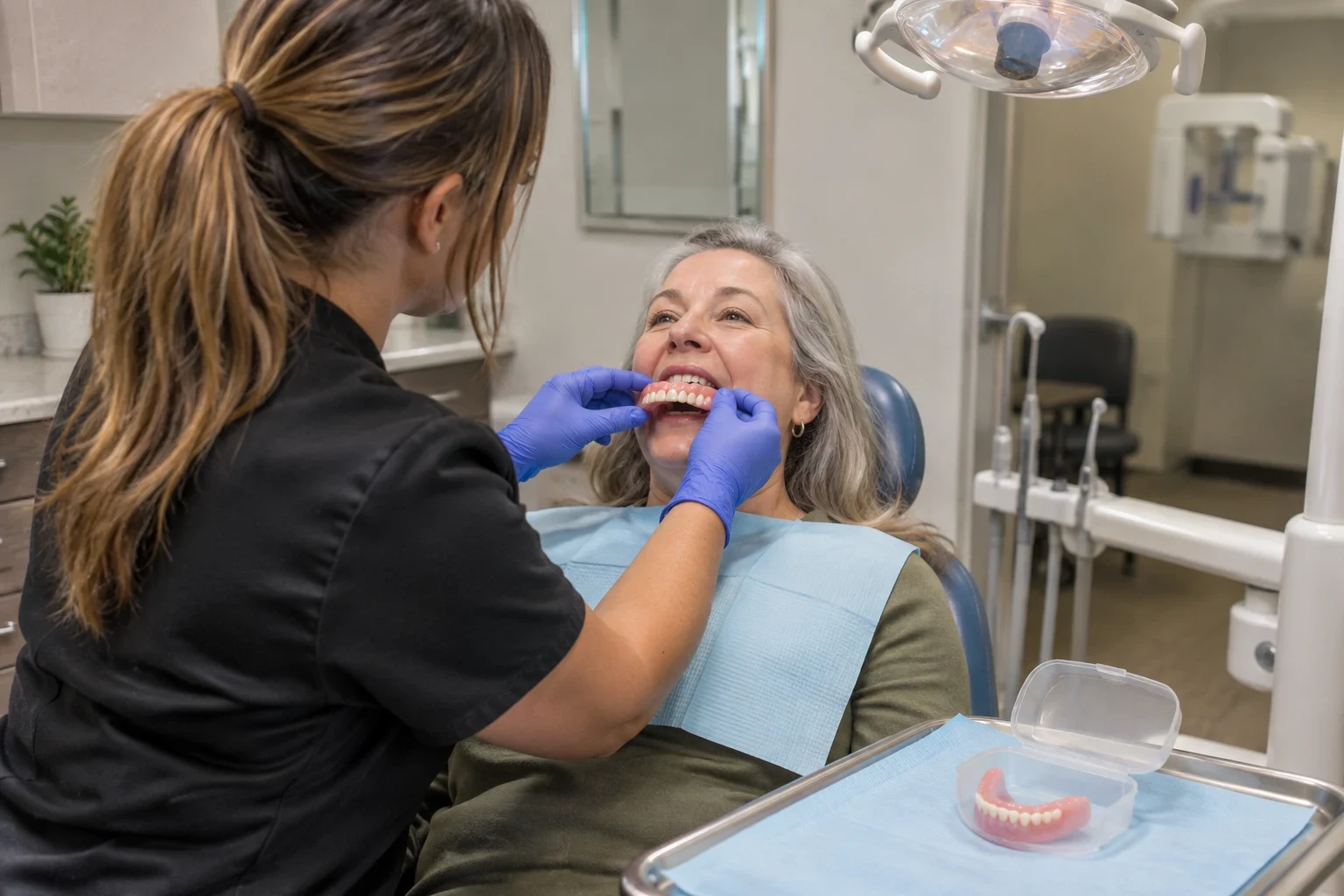
We make full and partial dentures, plus overdentures that snap onto dental implants. Before anything is made, we photograph your gums, remaining teeth and bite, then walk you through what we found and which denture design will stay put and chew well for your mouth.
When Dentures Are the Right Call
A denture replaces missing teeth with a removable prosthesis: acrylic teeth set in a gum-colored acrylic base, held in place by suction, clasps or implant attachments. It suits patients missing most or all of their teeth in an arch, people whose remaining teeth can't be saved, and anyone who needs a full set of teeth without the cost of an implant for every tooth.
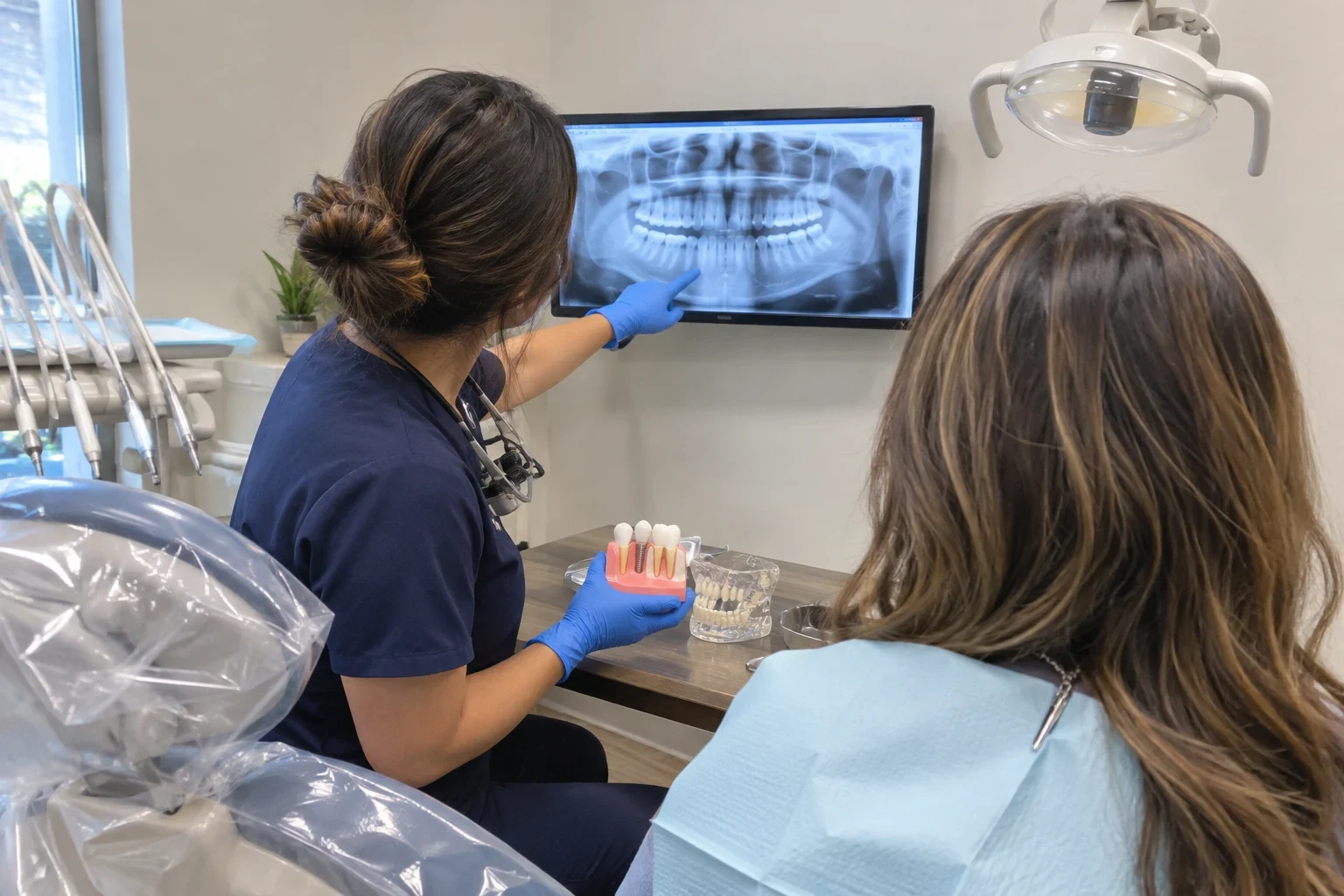
The catch is bone. Once a tooth is gone, the jawbone that held it slowly shrinks because nothing is loading it. As the ridge flattens, a denture that once sat snugly starts to shift and rub against the gums. We measure that change, show it to you on your X-rays and images, and tell you plainly whether a reline, a new denture or a few implants under the denture will solve it.
Our over 10 years of experience in general and implant dentistry lets us design a conventional denture today that still leaves room to add implants later, if you want more stability down the road.
What Our Denture Work Includes
- Full dentures
- A complete upper or lower set for an arch with no remaining teeth. The upper relies on suction across the palate; the lower has less surface area, which is why lower dentures tend to move more.
- Partial dentures
- A partial fills gaps between your natural teeth. We use a cast metal framework with clasps for strength, or a flexible base when appearance or a metal sensitivity matters more.
- Immediate dentures
- Fabricated ahead of time and seated at the same appointment as your extractions, which means you never walk out without teeth while the gums heal. Expect a reline once the swelling settles and the ridge reshapes.
- Implant-retained overdentures
- Two to four implants in the jaw with attachments that the denture clicks onto. The denture stops sliding when you chew, and the implants put load back on the bone, which slows the shrinkage that loosens regular dentures.
- Relines and adjustments
- New acrylic added to the fitting surface so the denture matches your ridge again. We also grind down pressure spots that cause sore areas.
Signs It's Time for Dentures or a New Set
Several teeth are failing at once
Deep decay, cracked roots or advanced gum disease across many teeth can make individual repairs a losing fight. A denture, sometimes after extractions, can be the more predictable path.
Your denture rocks or drops
Movement when you talk or bite usually means the bone underneath has shrunk. Adhesive only covers the gap for a while.
Sore spots that keep coming back
A denture that no longer fits concentrates pressure on small areas of gum. Those spots get raw, and chewing starts to hurt.
Worn or chipped denture teeth
Acrylic teeth wear flat over years. Flat teeth chew poorly and can collapse your bite, which makes the lower face look shorter.
You avoid foods you used to eat
If you have dropped steak, raw vegetables or crusty bread because they are too hard to manage, the fit or design isn't doing its job.
What Moves the Cost of Dentures
Most of the cost comes from the work that happens before and beneath the denture, not only the denture itself. Your treatment plan shows the full number before any work begins. We are in-network with 15+ major PPO dental insurance plans, and for patients without coverage, our in-house Membership Plan is another way to pay for care. You can also use 0% interest financing for up to 24 months, and checking whether you preapprove has no impact on your credit score.
Denture type
A single partial costs less than a full upper and lower set. Implant-retained overdentures add the implants, attachments and surgical visits.
Extractions first
Teeth that need to come out add appointments and healing time. Immediate dentures also need a reline later as the ridge changes.
Bone and gum condition
Significant bone loss can call for implants or extra steps to get a stable fit. Your CBCT scan and exam reveal this early, so it is in the plan from the start.
Materials
Cast metal partial frameworks, flexible bases and higher-grade acrylic teeth differ in cost, strength and how they wear.
How Your Dentures Are Made
- 1
Exam, X-rays and photos
We examine your gums and any remaining teeth, take digital X-rays and photograph each arch. If implants are on the table, a CBCT scan shows bone height and width in 3D. You see every image and we explain what it means.
- 2
Treatment plan in writing
We lay out the denture type, any extractions or implants, the number of visits and the cost before you commit. If a reline will fix your current denture, we tell you that.
- 3
Impressions and bite records
We take detailed impressions of your ridges and record how your upper and lower jaws meet. You choose tooth shade and shape, and those choices go into your file for the lab.
- 4
Wax try-in
Before the final acrylic is processed, we set your chosen teeth in a wax base and let you check the look, your speech and the bite in the chair. Adjustments cost little at this point and a lot after processing.
- 5
Delivery and follow-ups
We seat the finished denture, check pressure points and adjust. Follow-up visits in the first weeks fine-tune the fit as your gums adapt, with photos to compare against where you started.
Denture Questions We Hear Often
How long does it take to get used to new dentures?
Most patients need a few weeks. Speech improves within days as your tongue learns the new shape, while chewing takes longer. Begin with soft foods in small pieces, and split each bite between the left and right sides so pressure stays even and the denture doesn't tip. Sore spots are normal early on, and we adjust them at follow-ups.
Should I get dentures or dental implants?
It depends on your bone, budget and how stable you need your teeth to be. Regular dentures are the lower-cost way to replace a full arch. Implant-retained overdentures cost more but stop the slipping, which matters most on the lower jaw. We go over your scans with you and explain both options so you can decide.
What if an implant under my overdenture fails?
Implants need about four months to fuse with the surrounding bone before they carry a denture. If an implant fails during that 4-month healing phase, we replace it at no charge. Failure in this window is uncommon, and we check healing at each visit so problems show up early.
Will my PPO insurance cover dentures?
Most PPO plans pay a portion of denture treatment, usually under a major-services category with its own percentage. Because we are in-network with 15+ major PPO dental insurance plans, our office verifies your benefits ahead of time and tells you your out-of-pocket share before treatment starts. Patients without insurance can ask about our in-house Membership Plan.
How long do dentures last?
Acrylic teeth wear and your jawbone keeps changing, so most dentures need relines over the years and eventual replacement. Bring yours in once a year so we can check the fit, look for cracks and catch problems before they cause sores.
See What Your Denture Options Look Like
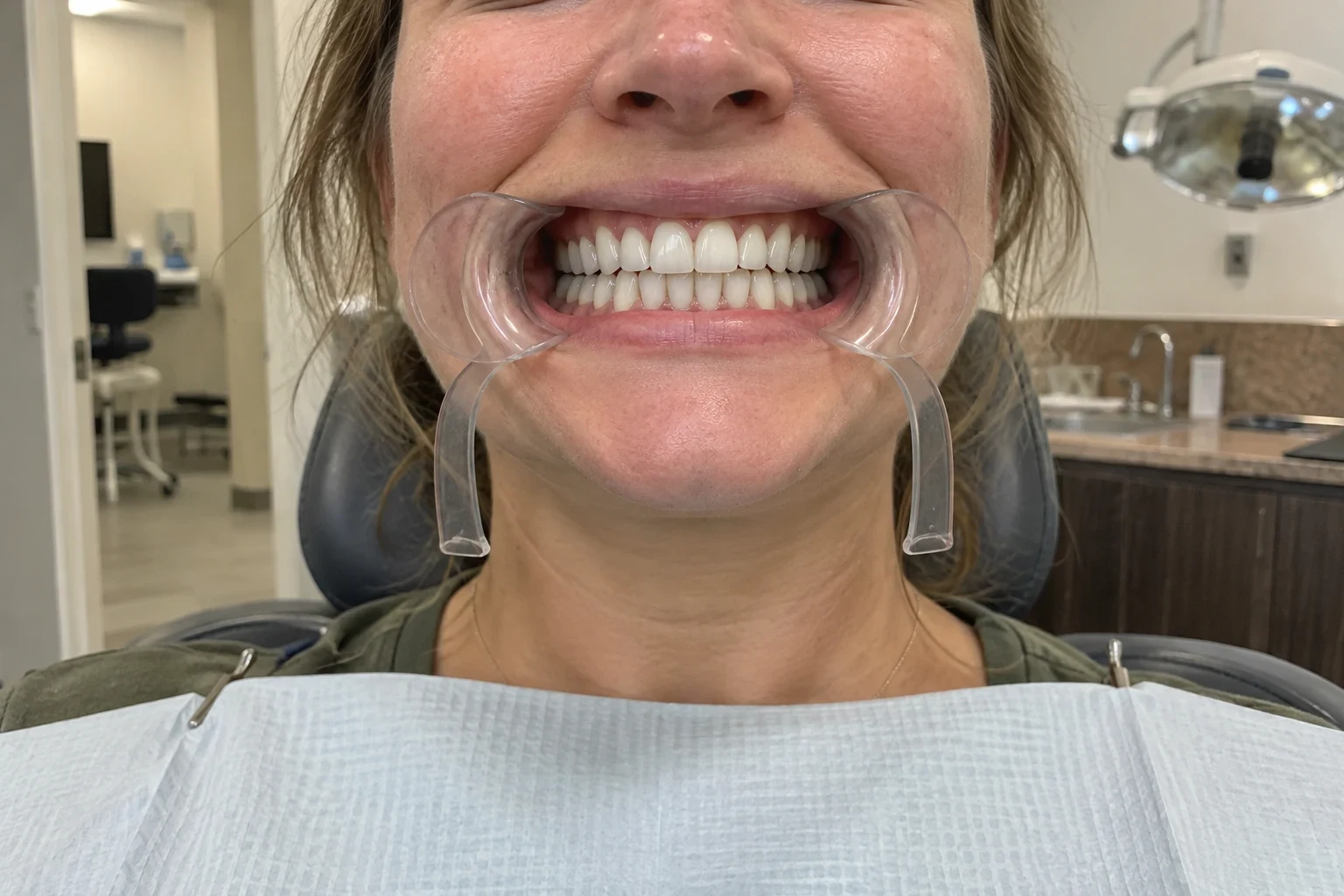
Our $25 focused evaluation includes a comprehensive exam, digital X-rays, treatment planning and a consultation, with a CBCT scan added if your mouth needs one. You leave with images of your gums and bone and a clear plan for the next step.