ServicesEmergency Dentistry
Emergency Dentistry in Little Elm
A throbbing tooth, a crack you can feel with your tongue or a crown that came off at dinner. We find the cause with an exam and digital X-rays, show you photos of what we see, and treat the problem or stabilize it so you can eat and sleep again.
What urgent dental care covers
Most dental pain has a physical cause we can find. Bacteria reach the pulp through a deep cavity or a crack, the nerve swells inside a sealed chamber, and pressure builds with nowhere to go. That is why a tooth can ache more when you lie down, and why cold makes some teeth worse and eases others.
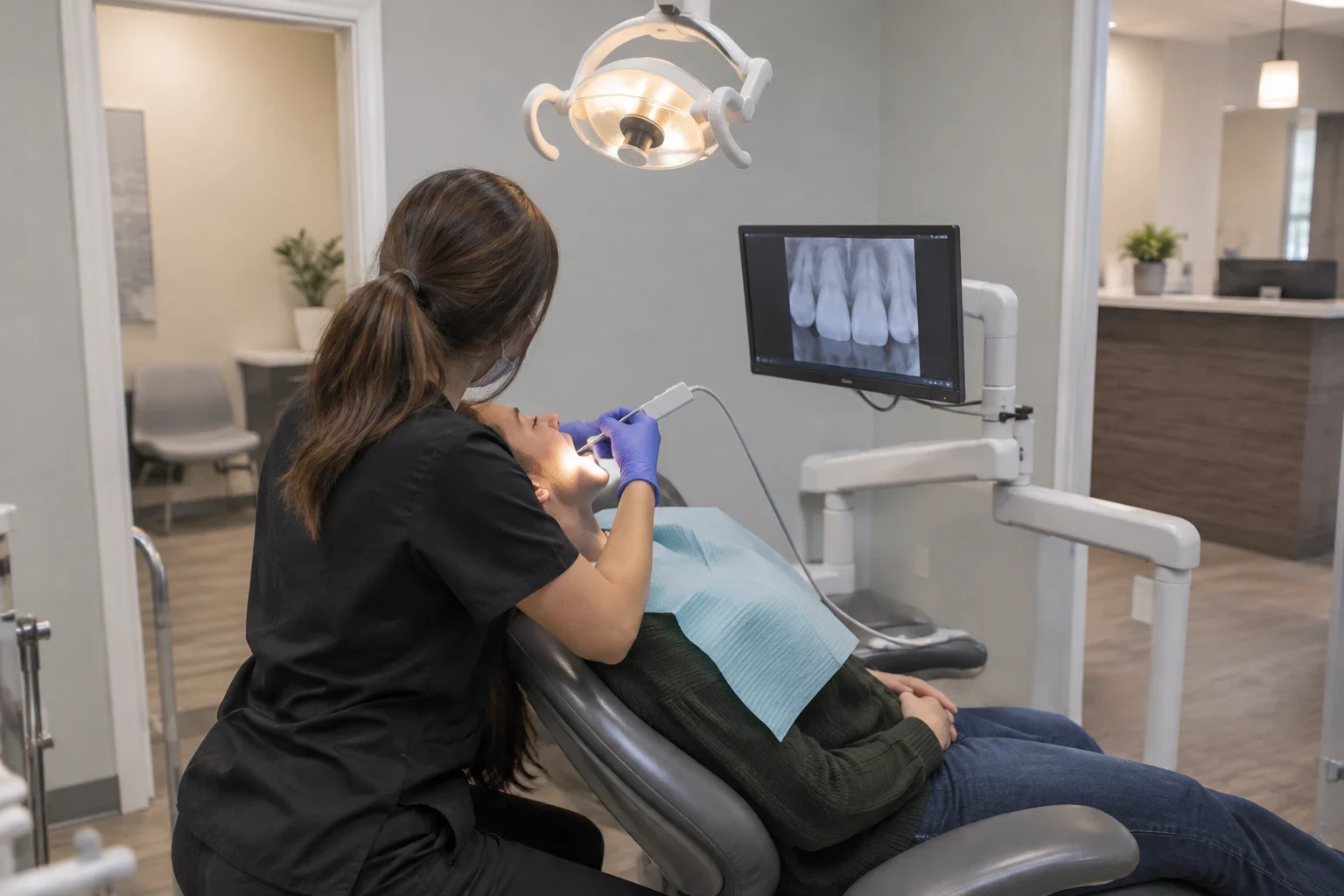
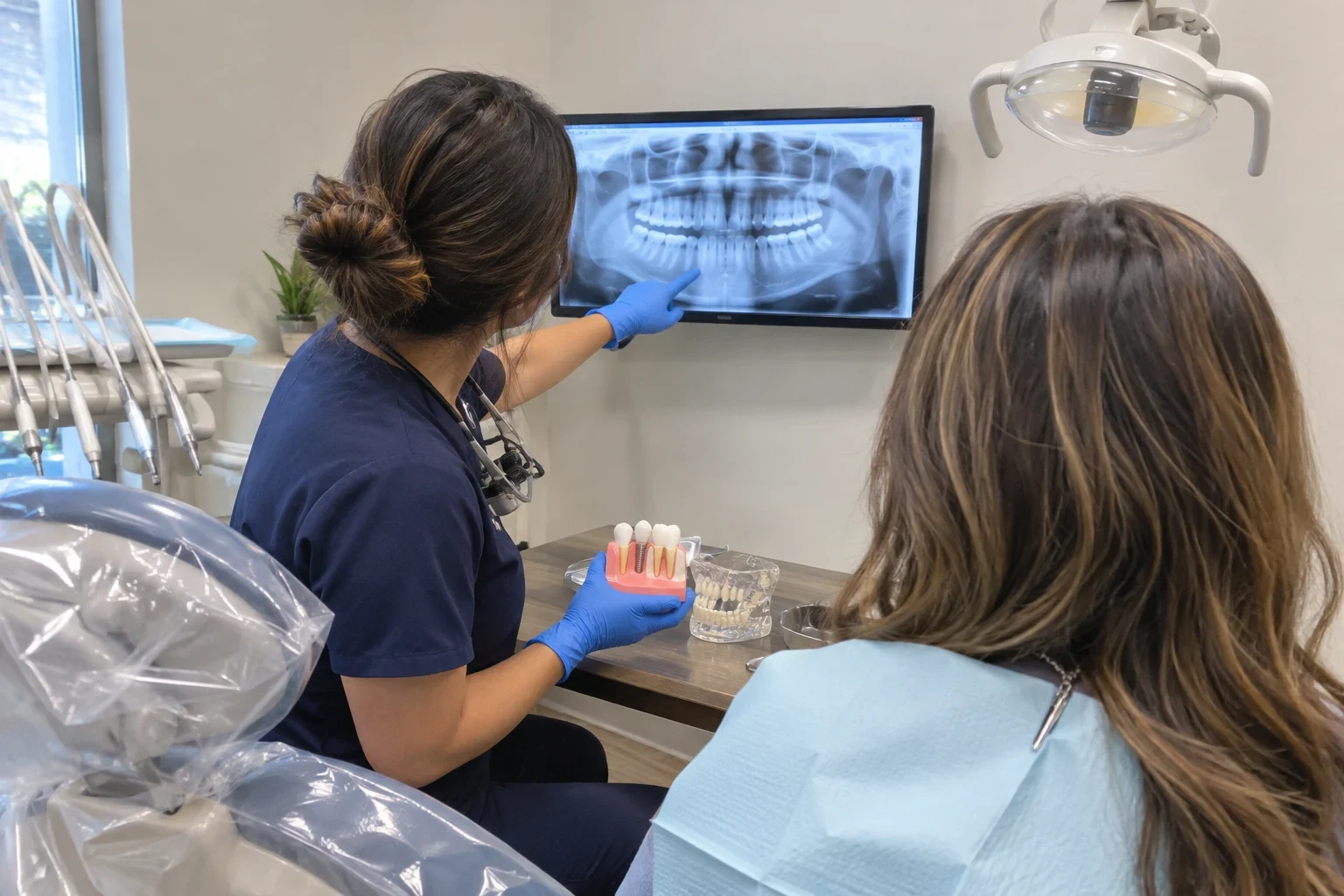
On an urgent visit, our job is to pin down which tooth and which problem, then stop the pain. We capture intraoral camera images and digital X-rays, and a CBCT scan when the root or bone needs a 3D look. You see everything on the screen beside the chair, so the treatment plan makes sense before anything starts.
We bring over 10 years of experience across both general and implant dentistry to every urgent case. That range matters most with a borderline tooth, where the honest call is weighing a repair against a planned replacement. Patients come to us from Little Elm, The Colony, Frisco and Oak Point when a tooth won't wait for a routine checkup.
What we handle at an urgent visit
- Toothache diagnosis
- Cold, bite and tap tests narrow the problem to one tooth. An X-ray shows whether decay has reached the pulp or an infection has formed at the root tip.
- Infection and swelling
- An abscess is a pocket of pus at the root or in the gum. We relieve the pressure by opening the tooth or draining the area, and prescribe antibiotics when infection has spread into the surrounding tissue.
- Cracked and broken teeth
- A cusp that snapped off can often be rebuilt with tooth-colored composite resin or covered with a crown. A crack that runs down into the root usually cannot be sealed. We show you the image that tells you which one you have.
- Lost fillings and crowns
- If the crown is intact and the tooth under it is sound, we clean out the old cement and recement it. If decay loosened it, we treat the decay first so it doesn't come off again.
- Wisdom tooth flare-ups
- A partly erupted wisdom tooth traps food under a gum flap, and the tissue gets infected, a condition called pericoronitis. We clean and irrigate the area to calm it, then talk through whether wisdom teeth removal makes sense.
- Teeth knocked loose
- A tooth pushed out of position by a fall or a ball can be repositioned and splinted to its neighbors while the ligament heals.
Signs a tooth needs attention now
Pain that lingers or wakes you up
Sensitivity that fades in a second or two usually comes from the outer tooth. Pain that lingers 30 seconds or more after cold, or throbs on its own at night, points to an inflamed nerve that rarely settles without treatment.
A gum boil, bad taste or swollen cheek
A small raised spot that drains near the root, a salty or foul taste, or puffiness along the jaw all signal infection. Should the puffiness climb toward your eye, or should swallowing or breathing start to feel difficult, get to a hospital without waiting for a dental appointment.
Sharp pain when you release a bite
Pain on release is a classic sign of a cracked tooth. The crack flexes under load, and the longer it is chewed on, the deeper it tends to run.
A broken tooth or missing filling
Even without pain, exposed dentin picks up decay quickly, and the thin walls left behind can break further.
A tooth that feels high
When a tooth feels taller as you bite, infection at the root tip may be pushing it up in the socket.
How an urgent visit runs
- 1
Tell us what happened by phone
Describe the pain, when it started and what sets it off. We find you an appointment and tell you what to bring, including your insurance card and a list of your medications.
- 2
Exam, X-rays and photos
We test the suspect tooth, take digital X-rays and intraoral photos, and add a CBCT scan if a root fracture or spreading infection is suspected. This is our $25 focused evaluation, which also includes treatment planning and consultation.
- 3
Options on the screen
We show you what we found and lay out the choices, for example a root canal to save the tooth or an extraction. You get the cost of each option before we begin.
- 4
Relief or stabilization
Under local anesthetic, we relieve the pain that visit when we can: opening and medicating the nerve, draining an abscess, rebuilding a broken edge with composite or recementing a crown. Larger work like a new crown or an implant is scheduled once the area calms down.
- 5
After images and next steps
Before you leave, you see what was done on the screen and get clear instructions for the next few days, along with any follow-up the tooth needs.
What moves the cost of urgent care
Every urgent visit starts with the $25 focused evaluation: the exam, digital X-rays, a CBCT scan if needed, plus treatment planning and consultation. What follows depends on what those images reveal, and we give you the number before any treatment starts. We are in-network with 15+ major PPO dental insurance plans, so your benefits may lower your share. If you have no dental insurance, our in-house Membership Plan is another way to cover care.
- Stabilize now or finish now
- Opening a tooth and placing a temporary medicated filling costs less on the day than completing a root canal and crown. Many patients split the work across visits.
- How far the damage reaches
- A chipped edge needs a small composite repair. A fracture that runs below the gumline may need a crown, a root canal or removal.
- Active infection
- An abscess can add drainage, a prescription and a follow-up check.
- Saving or replacing the tooth
- If the tooth can't be saved, the extraction is one cost and replacing it with dental implants or dentures is another. 0% interest financing for up to 24 months is available, and checking for preapproval has no credit score impact.
Questions about urgent dental visits
Something not covered here? (972) 853-5982
How soon can I be seen for a toothache?
Phone us and describe what is going on. We fit urgent problems into the schedule as quickly as we can and tell you honestly when the earliest opening is. Until then, an over-the-counter pain reliever taken as the label directs, a cold compress on the outside of the cheek and chewing on the other side help most toothaches.
Should I go to the ER for a toothache?
A hospital ER can prescribe pain medicine and antibiotics but usually can't treat the tooth itself. Go there if swelling spreads toward your eye or neck, you have trouble swallowing or breathing, or you run a high fever. For pain, a broken tooth or a lost crown, a dental office is where the cause gets fixed.
My crown fell off. Can I glue it back on?
Please don't use super glue. It can seal decay under the crown and damage both the crown and the tooth. Keep the crown in a small bag, chew on the other side and bring it to your appointment. Temporary cement from a pharmacy is fine for a day or two if the bare tooth feels sharp.
Will antibiotics fix my tooth?
Antibiotics help when infection has spread into the tissue and causes swelling or fever, but they can't reach the source inside the tooth. Pain from an inflamed nerve without swelling usually won't improve with them. The lasting fix is a root canal to clean out the infected pulp, or removing the tooth.
What happens if the tooth can't be saved?
We remove it gently and talk about replacement when you are ready, since a gap lets neighboring teeth drift. Should you choose a dental implant and it fails while the bone is integrating during the 4-month healing phase, we place a new one at no charge.
Get the tooth looked at before it gets worse
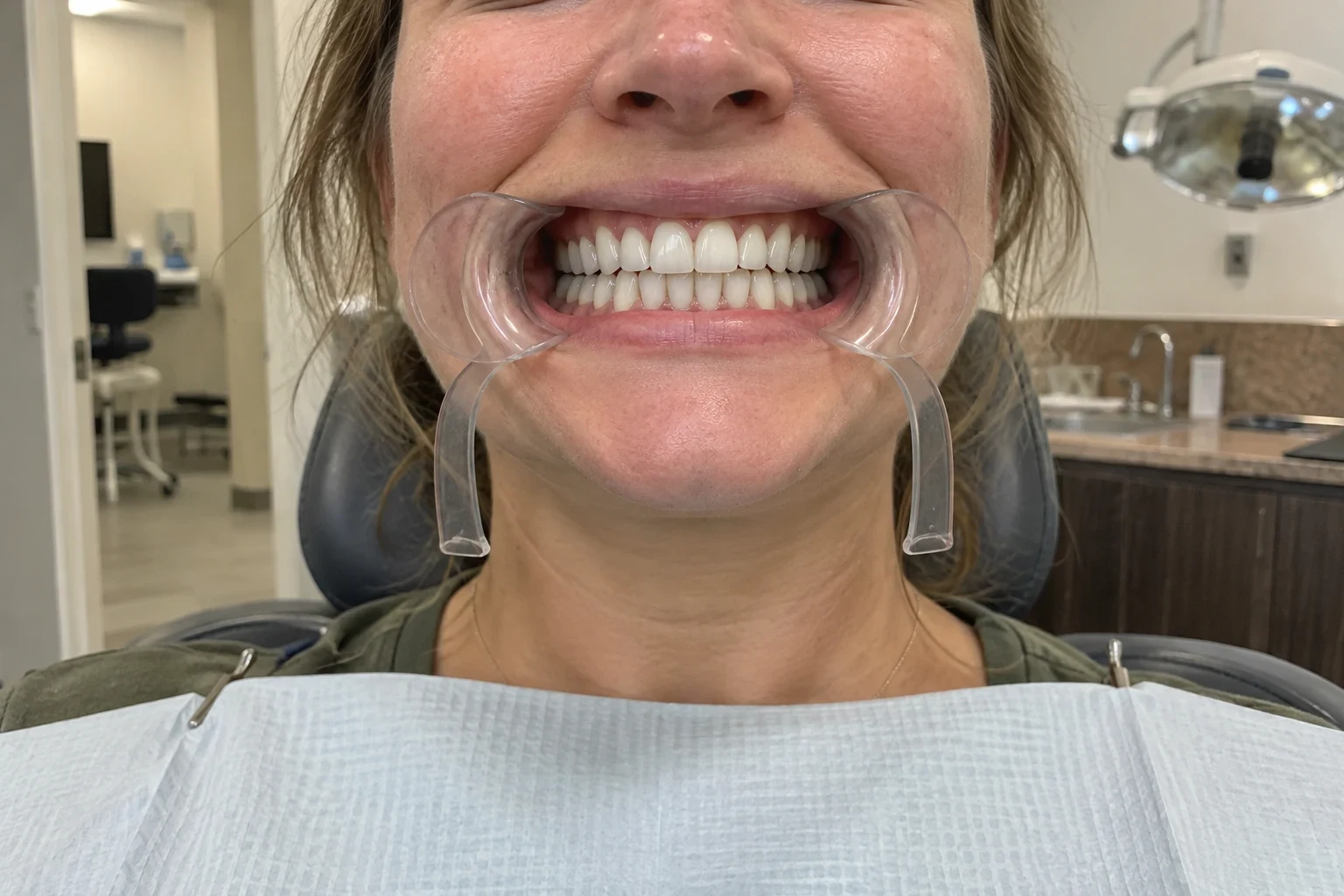
Tell us what happened and we will find you an appointment. The $25 focused evaluation gets you the exam, X-rays and a clear plan, with photos that show exactly what is wrong.